
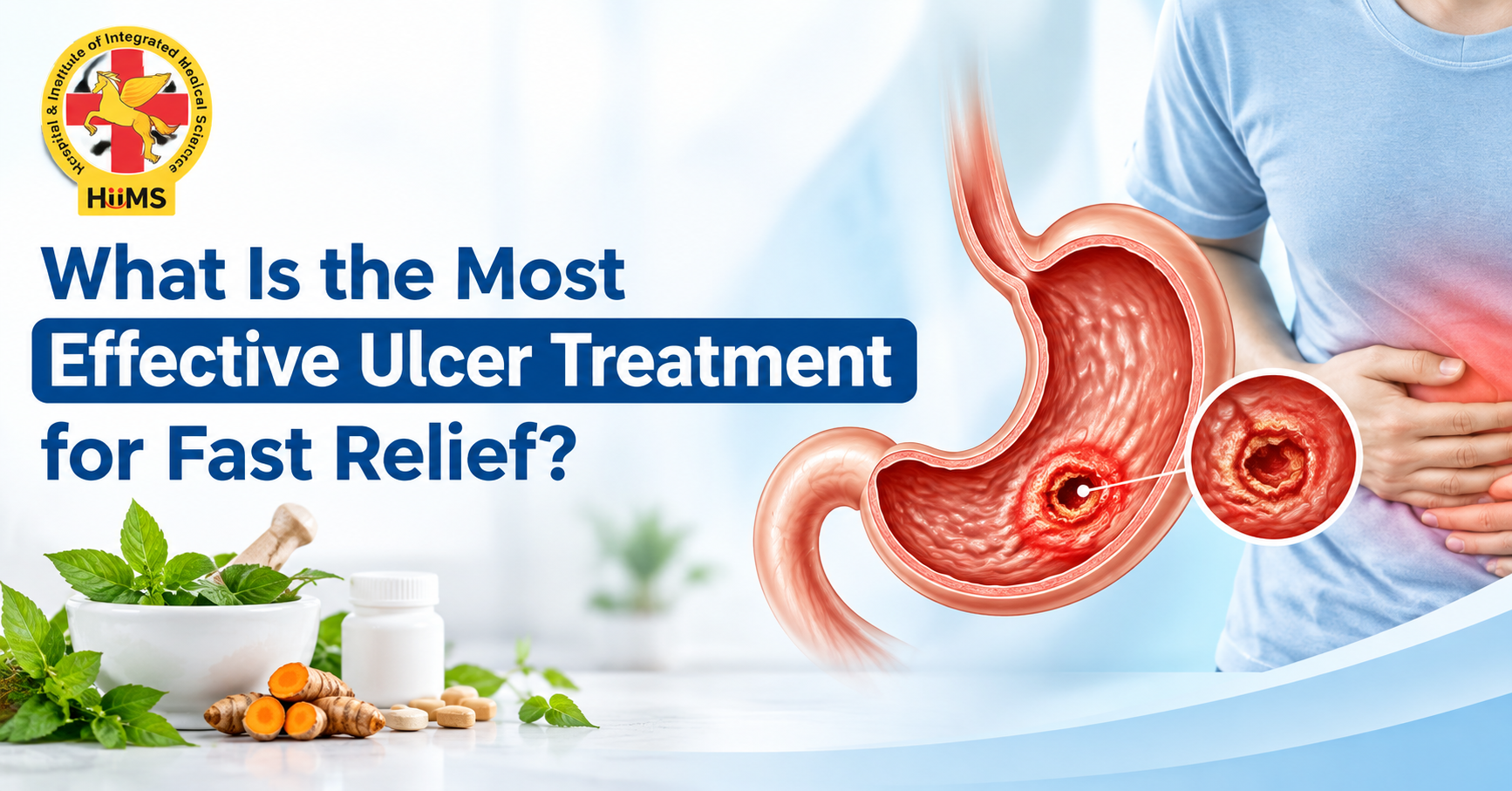
An ulcer can cause persistent discomfort, burning, abdominal pain, bloating, and changes in digestion. For many people, the immediate concern is finding relief while also understanding why the problem keeps returning. Ulcer care should not focus only on reducing discomfort; it should also consider digestion, food habits, stress, lifestyle, and overall digestive health.
Ayurveda takes a holistic approach to digestive concerns by looking at the balance of doshas, digestive strength, diet, daily routine, and individual health conditions. At Jeena Sikho HiiMS, Ayurvedic care focuses on understanding the individual and creating a personalised approach for digestive wellness.
What Is an Ulcer?
An ulcer is an open sore that can develop in the lining of the stomach or the upper part of the small intestine. When the protective lining becomes damaged, digestive acids can irritate the underlying tissue and contribute to discomfort.
Ulcers may develop in different parts of the digestive tract. Common types include:
- Gastric ulcers: Develop in the stomach lining.
- Duodenal ulcers: Develop in the first part of the small intestine.
- Peptic ulcers: A general term used for ulcers occurring in the stomach or duodenum.
The symptoms and severity can differ from person to person, so persistent digestive discomfort should be evaluated appropriately.
What Causes Ulcers?
Several factors may contribute to ulcer development or aggravate existing digestive irritation. These can include:
1. Digestive Imbalance
From an Ayurvedic perspective, improper digestion can disturb the normal functioning of the digestive system. Irregular eating patterns, unsuitable foods, and poor daily routines may affect digestive balance.
2. Spicy and Irritating Foods
Frequent consumption of very spicy, oily, fried, highly processed, or acidic foods may aggravate digestive discomfort in some individuals.
3. Irregular Meal Timings
Skipping meals or eating at inconsistent times can affect digestion. Maintaining regular meal timings may support better digestive function.
4. Excessive Stress
Mental stress can influence digestion and may make existing digestive discomfort feel worse. A balanced routine that includes adequate rest and relaxation can be an important part of digestive care.
5. Unhealthy Lifestyle Habits
Insufficient sleep, sedentary habits, excessive consumption of processed foods, and irregular daily routines may negatively affect overall digestive wellness.
What Is the Most Effective Ulcer Treatment for Fast Relief?
There is no single ulcer treatment that works equally for everyone. The appropriate approach depends on the ulcer's location, severity, underlying factors, symptoms, and overall health.
For people looking for an Ayurvedic approach, treatment generally focuses on improving digestive balance, supporting the stomach lining, regulating diet, and addressing contributing lifestyle factors rather than focusing only on temporary symptom relief.
At Jeena Sikho HiiMS, Ayurvedic ulcer care may involve an individual assessment followed by personalised dietary guidance, lifestyle recommendations, Ayurvedic formulations, and supportive therapies when considered appropriate.
The goal is to support the body's natural healing processes while improving digestive health.
Ayurvedic Approach to Ulcer Management
Ayurveda considers digestion an important component of overall health. When digestive function becomes disturbed, it may affect appetite, bowel habits, energy, and comfort.
An Ayurvedic approach may therefore focus on the following areas:
Supporting Healthy Digestion
Maintaining balanced digestion is an important part of managing digestive complaints. Meals may be adjusted according to an individual's digestive capacity and health requirements.
Improving Food Habits
Simple, freshly prepared meals that are easier to digest may be preferred. Individual dietary recommendations can vary depending on the person's constitution and digestive condition.
Balancing Daily Routine
Regular meal times, sufficient sleep, appropriate physical activity, and stress management can help create a healthier routine.
Personalised Ayurvedic Care
Ayurvedic treatment is traditionally individualised. Two people experiencing similar symptoms may require different approaches depending on their constitution, digestion, lifestyle, and other health factors.
Which Foods May Support Ulcer Care?
Diet can play an important supportive role in digestive wellness. People experiencing ulcer-related discomfort may find it useful to choose simple and easily digestible foods.
Some commonly considered options include:
- Soft-cooked vegetables
- Rice or light grains
- Moong dal
- Fresh seasonal fruits that are well tolerated
- Light soups
- Adequate water
- Freshly prepared meals
Food tolerance can vary considerably. A food that feels comfortable for one person may aggravate symptoms in another.
Foods to Limit
Depending on individual tolerance, it may be helpful to reduce:
- Very spicy foods
- Deep-fried foods
- Excessively oily meals
- Highly processed foods
- Very acidic foods if they trigger discomfort
- Large, heavy meals
- Excessive tea or coffee if they worsen symptoms
Rather than making extreme dietary restrictions, it is useful to identify foods that consistently aggravate symptoms.
Can Lifestyle Changes Help With Ulcer Relief?
Yes. Lifestyle habits can complement an appropriate ulcer-care plan.
Eat at Regular Times
Try to maintain consistent meal timings instead of frequently skipping meals.
Avoid Overeating
Large meals may place additional stress on digestion. Smaller, balanced meals may be easier to tolerate for some people.
Prioritise Sleep
Adequate and regular sleep supports overall wellbeing and may help maintain a healthier daily rhythm.
Manage Stress
Breathing exercises, meditation, gentle yoga, relaxation practices, and time away from stressful activities may support digestive wellbeing.
Stay Physically Active
Appropriate daily movement can support general health and digestion. However, strenuous activity should be avoided if it increases discomfort.
How Does Jeena Sikho HiiMS Approach Ulcer Care?
Jeena Sikho HiiMS follows an Ayurvedic and holistic approach to health. For digestive concerns such as ulcers, the focus may include understanding the person's health history, dietary patterns, lifestyle, digestive condition, and individual requirements.
Based on the assessment, an Ayurvedic care plan may include:
- Individual health assessment
- Dietary guidance
- Lifestyle and routine recommendations
- Ayurvedic formulations when appropriate
- Supportive Ayurvedic procedures when indicated
- Regular follow-up and monitoring
The exact approach should be determined according to the individual's condition rather than following a standard plan for everyone.
How Quickly Can Ulcer Symptoms Improve?
The time required for improvement varies. Some people may experience changes in discomfort relatively quickly after modifying aggravating habits, while healing an established ulcer can take considerably longer.
Fast relief from symptoms does not necessarily mean that the ulcer itself has completely healed. Therefore, persistent or recurring symptoms should not be ignored.
A consistent approach involving appropriate evaluation, dietary care, lifestyle modification, and individualised treatment can be more meaningful than relying only on temporary relief.
When Should You Seek Immediate Medical Attention?
Certain symptoms associated with ulcers can indicate a serious complication and require urgent medical evaluation. Seek immediate medical attention if you experience:
- Vomiting blood or material resembling coffee grounds
- Black, tarry stools
- Severe or sudden abdominal pain
- Fainting or significant weakness
- Persistent vomiting
- Unexplained or significant weight loss
- Difficulty eating or swallowing
These warning signs should not be managed at home without professional evaluation.

Final Thoughts
The most effective ulcer treatment is not necessarily the one that provides the quickest temporary relief. A sustainable approach should consider the underlying factors contributing to digestive irritation while supporting healthy digestion and lifestyle habits.
Ayurveda focuses on personalised care, dietary discipline, balanced routines, and supporting the body's natural healing processes. Jeena Sikho HiiMS provides an Ayurvedic approach that considers the individual's overall health while developing a suitable digestive-care plan.
If ulcer symptoms are persistent, recurrent, severe, or accompanied by warning signs such as bleeding or black stools, professional evaluation should be sought promptly.
Frequently Asked Questions About Ulcer Treatment
1. Can ulcers heal naturally?
Some ulcers can heal when the underlying cause is addressed and appropriate care is followed. However, persistent symptoms require proper evaluation rather than relying solely on home remedies.
2. Is diet important during ulcer care?
Yes. Dietary habits can influence digestive comfort. Fresh, simple, easily digestible foods may be better tolerated, while foods that consistently trigger irritation can be limited.
3. Can stress make ulcer symptoms worse?
Stress may contribute to digestive discomfort and can make existing symptoms feel more noticeable. Stress-management practices can therefore be a useful part of overall care.
4. Is Ayurvedic treatment suitable for every ulcer?
The suitability of any Ayurvedic treatment depends on the individual's condition, severity, medical history, and other factors. Personalised assessment is important before beginning treatment.